If you want to play the U.S. Open at Shinnecock Hills on your golf simulator, this is your year.
The 126th U.S. Open will be played June 18-21, 2026 at Shinnecock Hills Golf Club in Southampton, New York. Instead of just watching the championship, you can load the same course indoors and test your game against one of the most respected venues in American golf.
2026 U.S. Open Host Course: Shinnecock Hills
Shinnecock Hills opened in 1891 and is one of the five founding clubs of the United States Golf Association. The current course is most closely associated with architect William Flynn, whose early 1930s design still defines the routing today.
In U.S. Open setups, Shinnecock typically plays as a par 70 stretching beyond 7,400 yards from the championship tees. The course moves across exposed, rolling terrain with elevated greens that demand precise approach control. It is not a tricked-up layout. It is a disciplined one.
Three Holes You Have to Play
Hole 7 - “Redan” (Par 3)
This is one of the most famous Redan holes in American golf. The green sits on a diagonal, sloping from front-right to back-left. In GSPro, attacking a left pin directly is rarely the smart play. The better move is to use the high right side and let the contour feed the ball toward the hole. Miss short or left and you’ll quickly understand why this hole has frustrated U.S. Open fields for decades.

Hole 16 - “Shinnecock” (Par 5)
At over 600 yards in U.S. Open setups, the 16th is the only par 5 on the back nine and one of the key scoring opportunities late in the round. It winds through fescue and bunkering, and unless you absolutely stripe your drive, it’s typically a three-shot hole. A controlled wedge into the green is your best chance to pick one up before heading into the demanding finish.
Hole 18 - “Home” (Par 4)
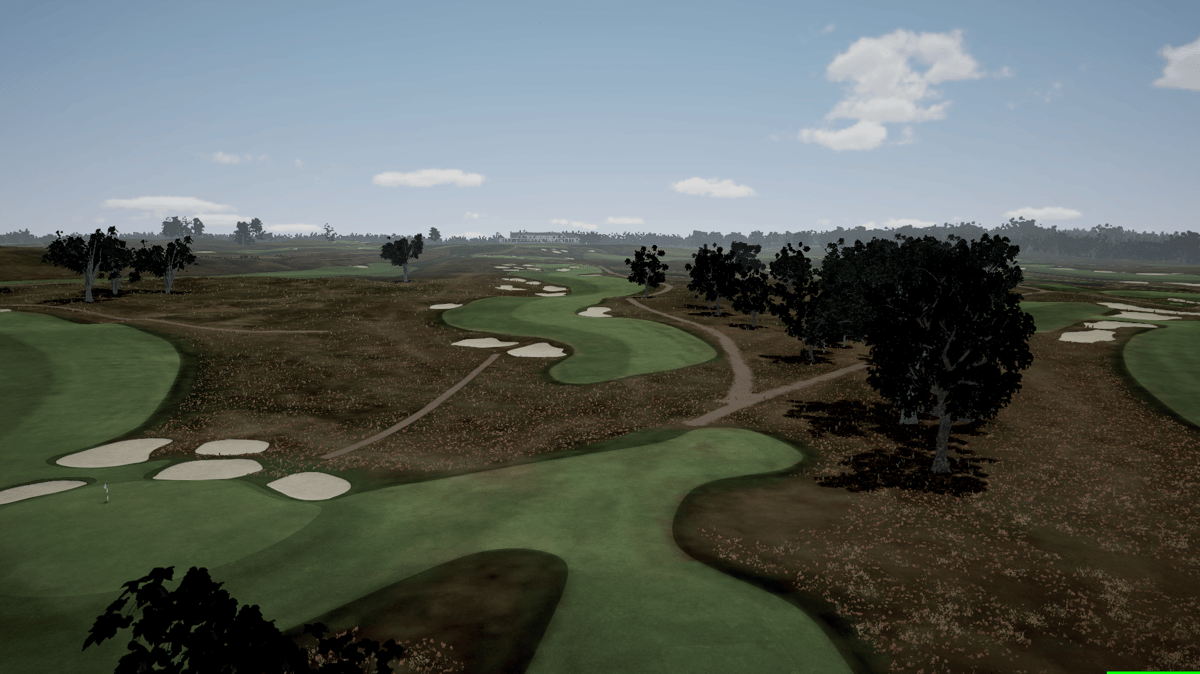
The closing hole climbs uphill toward the clubhouse and has decided multiple championships. The tee shot plays over rising terrain, and the approach is significantly uphill into a pitched green. This is where Corey Pavin famously hit 4-wood in 1995 to set up his winning par. It’s a proper U.S. Open finish, and it feels like one even indoors.
See the Course Before You Play It
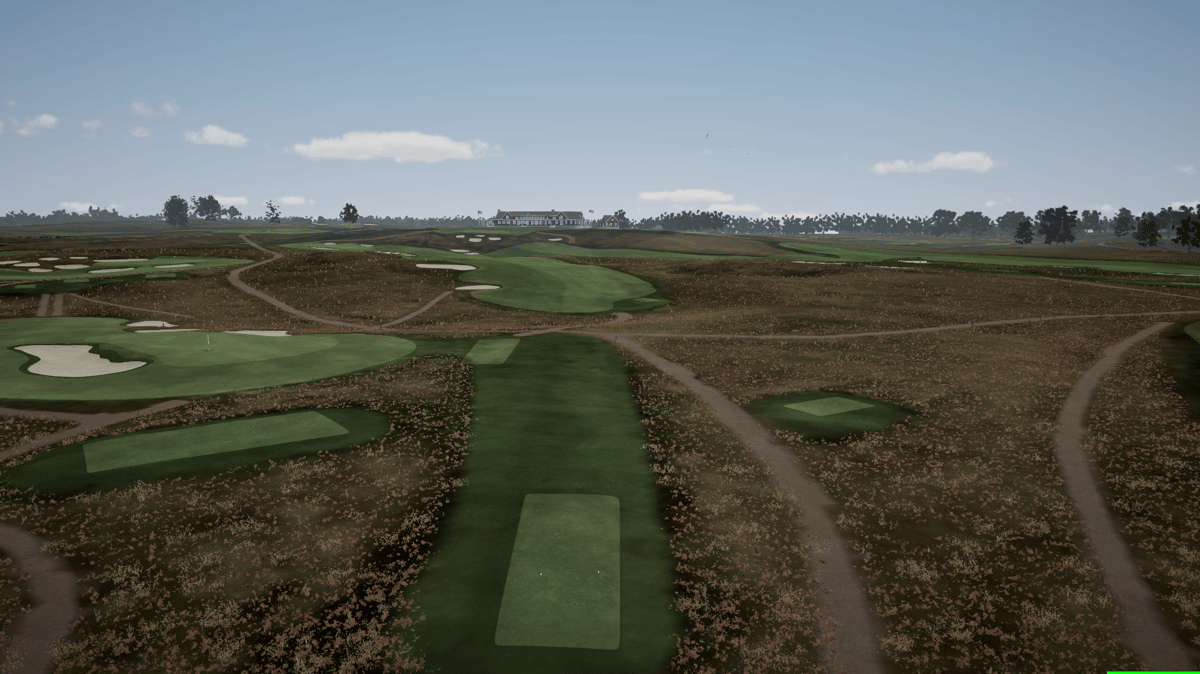
If you want a closer look before you tee it up, check out the Shinnecock Hills flyover on YouTube by Eaglesnbirdies. They consistently showcase some of the best GSPro courses out there and give a clean look at routing, elevation, and green complexes.
The GSPro version of Shinnecock Hills was designed by Tekbud, one of the standout course designers in the GSPro community. If you’ve played GSPro for any amount of time, you’ve probably run into their work. The detail and realism show up immediately.
How to Play Shinnecock Hills on GSPro
If you’re using GSPro, here’s how to find it:
- Open GSPro
- Select Local Match
- Use the course search bar and type Shinnecock or Shinnecock Hills
- Download the course and start your round
For a realistic U.S. Open setup, move back to the championship tees and play it as a four-round event. Track your score relative to par. That’s where you’ll really see how demanding the layout can be.
Recent U.S. Open Courses You Can Also Play
The U.S. Open rotates venues each year, which means your simulator library keeps growing with major championship tests. If you want to revisit recent sites, start here:
2025 - Oakmont Country Club
Established in 1903 and designed by Henry Fownes, Oakmont is known for its lightning-fast greens and iconic Church Pews bunker. It has hosted the U.S. Open more times than any other course.

2024 - Pinehurst No. 2
Donald Ross’ Pinehurst No. 2 is defined by crowned green complexes that repel indifferent iron shots. Precision into the greens is everything.
2023 - Los Angeles Country Club (North Course)
The North Course at LACC presented width off the tee but demanded strategic angles and firm green control throughout the round.
2022 - The Country Club (Brookline)
Brookline brought classic New England character back to the championship with tight corridors and historic bunkering.
Why the U.S. Open Is Fun to Recreate Indoors
The U.S. Open is built around control and patience. It is less about chasing birdies and more about managing misses.
That translates surprisingly well to a golf simulator. Load the course. Play it straight. Accept good pars. Try not to press.
You may not get the Atlantic wind off Long Island, but you will get the same routing, yardages, and green complexes the pros are navigating that week.
Search articles by tag:
GSPro SoftwareRelated Posts

GSPro, Software
How to Play the PGA Championship on a Golf Simulator

GSPro, Software
How to Play The British Open on a Golf Simulator
GSPro, Software
How to Play The Ryder Cup on a Golf Simulator